Exploring Explorer roses
By Bob Osborne, Corn Hill Nursery, Petitcodiac, NB
 |
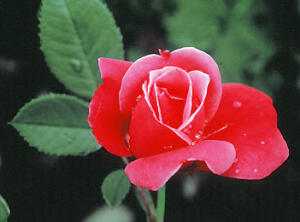
The last two decades have been a tremendously exciting time for the northern rose grower. In the past, cold country gardeners have looked at pictures of English cottage gardens with their doorways draped in riotous climbing roses with a mixture of envy and repressed anger. We no longer need to be envious or angry for we now have at our disposal a veritable cornucopia of roses that are hardy, easy to grow, beautifully formed and disease resistant to boot. These roses have come out of breeding programs in Europe, the United States (U.S.) and Scandinavia, but the most important of all have been developed in our own backyard.
Since the turn of the century, both amateur and professional rose breeders have been pushing the limits of roses further north. Some of the most important of these pioneers were people like Frank Skinner from Manitoba, Percy Wright from Saskatchewan, Georges Bugnet, Robert Simonet and John Wallace from Alberta, and doctors Isabella Preston, Henry Marshall and William Saunders from the Department of Agriculture. Using hardy rose species crossed with the best garden roses, they created varieties that were much hardier than any that had been produced previously. Many of these had good form and bloomed far longer than earlier hardy roses.
In this tradition, Agriculture Canada began a rose breeding program in the 1960s under the direction of breeder Felicitas Svejda. Her objective was to use roses from these earlier efforts and cross them with newly developed roses from Europe to create a series of roses that would be hardy, disease resistant, repeat blooming and easy to propagate from cuttings. A key component in this program was a new hybrid, Rosa kordessii, developed by the firm of Kordes in Germany. This rose was a relatively hardy pillar rose with long, vigorous shoots and exceedingly healthy foliage. Dr. Svejda also used several repeat blooming and compact Rosa rugosa varieties such as ‘Fru Dagmar Hastrup’ and ‘Schneezwerg’. The results of this ambitious program have forever changed northern rose gardens. In order of their release, here is a quick look at the roses that have come to be known as the Explorers.
|
Martin Frobisher (1968) This is a soft, semi-double and fragrant rose that grows on a vigorous, upright bush. It repeats well and is well formed. Its main drawback is a tendency for sections of the bush to die out. Jens Munk (1974) Henry Hudson (1976) John Cabot (1978) David Thompson (1979) John Franklin (1980) Champlain (1982) Charles Albanel (1982) William Baffin (1983) Henry Kelsey (1984) Alexander MacKenzie (1985) John Davis (1986) J.P. Connell (1987) Louis Jolliet (1990) Captain Samuel Holland (1990) Simon Fraser (1992) Frontenac (1992) George Vancouver (1994) Lambert Closse (1995) Royal Edward (1996) Nicholas (1997) Quadra (1997) Marie Victorin (1998) William Booth (1998) De Montarville (1998) Recently, the federal government, in its infinite but perhaps shortsighted wisdom, has decided to terminate the Explorer breeding program. It is unfortunate because the new generations of seedlings promised exciting breakthroughs in colour, form, hardiness and health. Equally unfortunate is the fact that this program has given and would have continued to give Canadian rose growers and exceptional opportunity to capture an important share of the exploding world market for shrub roses. In reaction to the unexpected uproar over this decision, a new scaled down version of the program was initiated in partnership with a group of participating nurseries from across Canada. This program hopes to release three or four varieties in the upcoming years that will be named after Canadian artists. Thankfully, we can still look forward to more exciting hardy roses in the future, roses that will grace the walls and beds of our homes in ways we would have thought impossible only a few short years ago. Bob Osborne is owner of Corn Hill Nursery near Petitcodiac, NB. He is author of Roses for Canadian Gardens and Hardy Trees and Shrubs, published by Key Porter Books. He has also published numerous articles on horticultural subjects in Canadian Gardening, Fine Gardening and Chatelaine. The CBC gardener for CBC Radio in Moncton, NB, Mr. Osborne has also contributed to the gardening series at the Brooklyn Botanical Gardens and published numerous articles in the Journal of the International Plant Propagators Society (IPPS). |