IPM Symposium 2026
Thursday, January 15, 2026 | 8 AM – 4 PM
Virtual & Recorded
Integrated Pest Management (IPM) is a holistic approach to managing pests that relies on cultural practices such as mowing, watering and fertilization to create an environment that is unfavorable to pests while promoting healthy growth of grasses. Landscape Ontario’s IPM Symposium, which has been held since 1965, is a widely respected event that brings together turf managers, researchers and industry experts to share knowledge and best practices for effective pest management.The symposium covers a broad range of topics, including pest identification, monitoring and control, as well as soil health, irrigation and plant nutrition. Through this event, turf managers are equipped with the tools and knowledge to promote turf health and sustainability while minimizing the use of pesticides and other harmful chemicals.
Register now for the added opportunity to win door prizes (valued at $200 each).
Registration
- Online registration extended to Wednesday January 15, 2026 at 5pm.
- Virtual event only.
- Must be online to win door prize
IPM Council Continuing Education Credits
- Speakers and topics have been pre-approved by the IPM Council.
- After passing an exam, 6 CEC credits can be obtained from the IPM Council
- 70% or higher to pass exam.
- Automatic submission of a passed exam will be sent on registrants’ behalf to obtain CEC until Feb. 1, 2026 at midnight.
ISA Continuing Education Units
- After passing an exam, 2.5 CEU credits can be obtained from ISA Continuing Education (please provide ISO #)
- Sessions qualifying for CEUs are:
- What Nursery and Landscapers Need to Know About the Spotted Lanternfly – 1 credit
- Update from Ministry of Environment – 0.5 credit
- Vegetation Management in Ontario: IPM Exceptions, Invasive Species, and Sustainable Alternatives – 0.5 credit
- Best Practices in Pest Management that Offer Solutions for Caring for Bees – 0.5 credit
Pricing
- Pricing includes full replay access to 2026 IPM Symposium.
- Member: $125
- Non-Member: $175
- Student $75
IPM Schedule:
- 8:00 Registration & Opening Remarks
- 8:30 – 9:00 Best Practices in Pest Management that offer solutions for caring for bees, Al Ramputh | Envu (0.5 CEC / 0.5 CEU)
- 9:00 – 9:15 A Brief Review of the Pesticide Industry Council Portal, Ian Service | Landscape Ontario
- 9:15 – 9:30 Break
- 9:30 – 10:00 The Unintended Consequences of #NoMowMay and #LeaveTheLeaves, Sara Stricker | Guelph Turfgrass Institute (0.5 CEC)
- 10:00 – 11:00 What Nursery & Landscapers Need to Know About the Spotted Lanternfly, Cassie Russell | OMAFA (1 CEC/ 1 CEU)
- 11:00 – 11:15 Break
- 11:15 – 11:45 Update from the Ministry of the Environment, Conservation and Parks, Scott Olan | Ministry of the Environment, Conservation and Parks (0.5 CEC / 0.5 CEU)
- 11:45 – 12:15 Vegetation Management in Ontario: IPM Exceptions, Invasive Species and Sustainable Alternatives, Vicki Maloney | Envu (0.5 CEC / 0.5 CEU)
- 12:15 – 12:45 Lunch
- 12:45 – 1:45 Leaving Us Out to Dry: Emerging Water Policy for Landscapes, Bob Mann | National Association of Landscape Professionals (1 CEC)
- 1:45 – 2:00 Break
- 2:00 – 3:00 Myth-Busting Turf Management: Your Questions Answered, Dr. Eric Lyons | University of Guelph (1 CEC)
- 3:00 – 3:15 Break
- 3:15 – 4:15 Climate Trends and Their Implications for Turf Management, Dr. Fred Yelverton | North Carolina State University (1 CEC)
- 4:15 Closing Remarks & Exam
REGISTER HERE SPONSORSHIP OPPORTUNITIES
Topics and Speakers:
Spotted lanternfly (Lycorma delicatula, SLF) is an invasive plant hopper that threatens Ontario’s agricultural and forestry sectors and is also considered a major nuisance pest in residential landscapes. First detected in Pennsylvania in 2014, SLF has spread to at least 18 states, including those bordering Ontario, and recent sightings and interceptions in Ontario tell us it’s on its way here! This talk will cover basic biology of the pest, current distribution, what is being done to manage SLF in the US and what IPM tools are available here in Canada. Most importantly, we will cover how to reduce the risk of spread, and what to do if you think you’ve spotted this unwelcome invader.

Cassie Russell is the Nursery and Landscape specialist with the Ontario Ministry of Agriculture, Food and Agribusiness (OMAFA). Cassie has a BSc. and MSc. both from the University of Guelph where her studies focused on entomology and integrated pest management. Previously, she worked with OMAFA as a vegetable and apple specialist and with a crop protection company as the technical specialist for Ontario. As the nursery and landscape specialist, she helps to provide the sector with technical information on invasive species, integrated pest management, emerging production techniques and best management practices for nurseries and funding opportunities. She also runs the ONnurserycrops blog where she posts timely updates and articles throughout the growing season.
Update from the Ministry of the Environment, Conservation and Parks This presentation will provide an overview of MECP’s pesticide program along with inspection and compliance updates. This session will discuss the do’s and don’ts of pesticide use in Ontario along with any upcoming program changes. In addition, Scott will outline a typical MECP inspection and provide answers to common questions received over the past year.

Scott joined the Ministry of the Environment Conservation and Parks as the Pesticides Specialist for the Eastern Region in 2015. He is currently a Divisional Program Specialist in the Ministry’s Program Services Unit. Scott has been a licensed exterminator for over 30 years and holds a Bachelor of Science in Agriculture Degree from the University of Guelph. Prior to joining the Ministry, Scott spent many years working in grounds maintenance, landscaping, and snow removal.
When it comes to the design and maintenance of landscapes, doing more with less is nothing new. But now we’re contemplating using less water, and it’s not just a matter of shutting off the irrigation controller. Policy makers across the country are looking at mandating water-conserving irrigation equipment, requiring certification of irrigation installation and maintenance contractors, so-called “non-functional turf” restrictions, water quality issues related to fertilizer and pesticides use and storm water management.

Bob Mann is the Senior Director of Technical and Regulatory Affairs for the National Association of Landscape Professionals. Bob is a proud graduate of both the Stockbridge School of Agriculture and the University of Massachusetts at Amherst. In addition to his work at NALP, Bob has been privileged to represent the landscape industry in many public forums including the Pesticide Board Advisory Council in Massachusetts, the Northeast IPM Advisory Council, the Board of Directors of The Pesticide Stewardship Alliance (TPSA), EPA’s Pesticide Program Dialog Committee, as well as Chair of the Pesticide Policy Coalition.
Honeybees are essential pollinators responsible for nearly one-third of global food crop production. However, in recent decades, beekeepers have observed alarming increases in winter colony losses—rising to nearly 30% compared to the expected 10–15%. One of the main causes is the Varroa destructor mite, a parasitic pest that feeds on bees and transmits viruses, ultimately weakening colonies and contributing to Colony Collapse Disorder (CCD). Additional factors such as poor nutrition, low genetic diversity, and incidental pesticide exposure further threaten bee health. Without intervention, infested hives often fail to survive the winter, resulting in reduced pollination and lower food yields.In summary, the development of the RNAi-based miticide to protect honeybees follows an eight-step process that integrates scientific innovation with environmental stewardship. It begins with identifying the problem—honeybee population decline caused primarily by Varroa mites—and conducting a feasibility study to assess the technical, financial, and ecological viability of creating a new treatment. Researchers then design an RNA interference (RNAi) concept that targets the mite’s genes without harming bees, selecting the Varroa calmodulin gene as the specific target. Once the active ingredient is identified, the product is formulated into a sucrose-based syrup that bees naturally distribute throughout the hive, allowing mites to ingest the dsRNA during feeding. Through laboratory and field testing, the miticide’s safety and effectiveness are validated, ensuring it reduces mite populations without affecting honeybee health or honey quality. The data are then submitted to Health Canada’s Pest Management Regulatory Agency (PMRA) for regulatory review. Finally, the product enters full-scale production and launch, supported by stewardship programs that guide safe use.Throughout this process, the honeybee, mite, and miticide each play interconnected roles. The honeybee acts as both a beneficiary and biological carrier—distributing the sucrose-based solution within the hive to reach developing larvae. The Varroa mite serves as the biological target, ingesting the dsRNA that interferes with its calmodulin gene, disrupting vital cell functions and ultimately leading to mite death. The miticide itself functions as the technological innovation, designed for species-specific action and environmental compatibility. By linking each development stage—from concept to commercial use—with the biological interactions inside the hive, this process demonstrates how modern biotechnology can protect pollinators through precise, safe, and sustainable pest management solutions.

Al Ramputh grew up in St. Catharines Ontario and obtained a BSc (Biology) from Western University, a MSc (Plant Physiology) from Brock University and a PhD (Chemical Ecology) from the University of Ottawa. Al has worked for Health Canada (PMRA-Pest Management Regulatory Agency), as a Regulatory Manager at Monsanto, Regulatory Specialist for Bayer Crop Science and is currently the Senior Regulatory Manager at Envu.
The #NoMowMay and #LeaveTheLeaves campaigns have surged in popularity, promoting a more “natural” approach to lawn and landscape care in home lawns, parks, and urban spaces. These initiatives encourage reduced mowing in May and the retention of leaf litter in autumn, often with claims of improved biodiversity and environmental benefits. But how do these practices actually influence turf performance? This session will present findings from a multi-year study conducted at the Guelph Turfgrass Institute, examining the real impacts of these campaigns on turf quality, weed establishment, and overall lawn resilience. Drawing on trials from spring 2023, 2024, and 2025, this presentation will provide evidence-based insights to help turf managers understand the trade-offs, challenges, and outcomes associated with these social media campaigns.
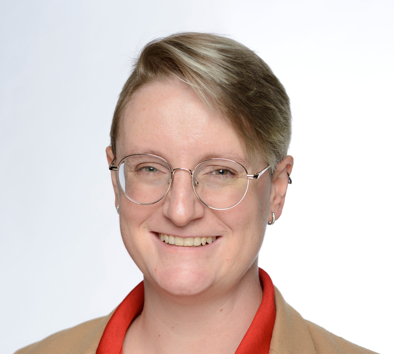
Dr. Sara Stricker is a plant pathologist and the Communications Coordinator at the Guelph Turfgrass Institute, where she works to make turfgrass research engaging, accessible, and relevant to both industry professionals and the public. She earned her B.Sc., M.Sc., and Ph.D. at the University of Guelph and later completed a Bachelor of Education at Western University. Sara has taught extensively in the Diploma in Turfgrass Management and the Turf Managers Short Course, offering courses in Plant Biology, Turf Weeds, Turf Insect Pests, and Environmental Management. Her work bridges science, education, and outreach to support the advancement of the turfgrass sector.
Vegetation Management in Ontario: IPM Exceptions, Invasive Species, and Sustainable Alternatives
This presentation focuses on Vegetation Management strategies within Ontario’s Integrated Pest Management (IPM) framework for Public Works. We will examine the regulatory exception under Ontario Regulation 63/09, detailing pesticide allowances, applicable site types, and compliance requirements for applicators and site owners. Additionally, we will address the management of invasive species such as Phragmites and Dog-Strangling Vine, highlighting their ecological impact and control options. Finally, we will discuss practical and environmentally responsible alternatives to glyphosate (Roundup), including mechanical, cultural, and other solutions for sustainable vegetation control. Attendees will gain actionable insights into balancing regulatory compliance, ecological stewardship, and operational needs.

Experienced research scientist and plant molecular biologist with a demonstrated history of working in research, higher education, and the forestry industry. Skilled in trial development, molecular biology of plants, plant and cell tissue culture, bioinformatics, DNA sequence data analysis, and much more. Strong research professional with a Doctor of Philosophy (Ph.D.) from The University of British Columbia.
In this interactive discussion, we’ll unpack and challenge common turf management myths related to mowing, watering, fertilization, aeration, overseeding, pest management, and more. The focus will be on separating myth from science to get the best outcomes from your inputs—understanding when and why to invest in practices like aeration and overseeding, how fertility decisions translate into turf performance, and how management choices show up as real, measurable results in the field. Bring your questions, your curiosities, and even the “tips” you’ve heard from neighbours or social media. Ask the expert what the science really says, how to make informed, sustainable decisions, and how to clearly communicate to customers how inputs turn into turf outcomes. This open-mic Q&A is designed to cut through the noise and help lawn care professionals feel confident in both their management strategies and their messaging.

Dr. Eric Lyons is an Associate Professor in the Department of Plant Agriculture at the University of Guelph. Dr. Lyons specializes in nutrient management, stress physiology and plant competition in sports fields, golf course and landscape turf. In addition, Dr. Lyons oversees extensive testing of new emerging products for turfgrass managers and focuses on outreach and education to further the turfgrass industry.
Climate change is expected to influence how pests, plants, and management practices interact in lawns and urban green spaces. Trends such as warmer winters and more frequent extreme weather events may allow certain insect pests, weeds, and diseases to persist longer, emerge earlier, or expand into new regions. At the same time, increased heat, drought, and intense rainfall can place added stress on turf and landscape plants, potentially reducing their tolerance to pest pressure and slowing recovery from damage. Evolving climate conditions may reshape pest management challenges in managed green spaces and influence how integrated pest management (IPM) is used in the future.
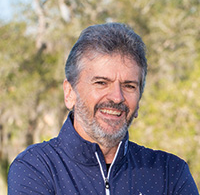
Dr. Fred Yelverton is a Professor and Extension Specialist in Turfgrass Science at North Carolina State University. His work focuses on weed management, herbicide performance, and integrated pest management strategies for managed turf systems. Dr. Yelverton is widely recognized for his practical, research-based approach to turf management and has worked extensively with industry professionals to translate science into effective field practices.
Sponsorship Opportunities
| PLATINUM SPONSOR | $3,000 Exclusivity as Platinum Sponsor, first right to renew partnership in 2027Event Exposure
Hospitality
|
SOLD OUT |
| GOLD SPONSOR | $1,700 Non-Exclusivity, Maximum 5, first right to renew partnership in 2027Event Exposure
Hospitality
|
BUY NOW |
| SILVER SPONSOR | $750 Non-Exclusivity, first right to renew partnership in 2027Event Exposure
Hospitality
|
BUY NOW |
| PLATINUM SPONSOR | ||
|---|---|---|
 |
||
| GOLD SPONSORS | ||||
|---|---|---|---|---|
 |
|
|
||
| SILVER SPONSORS | ||||
|---|---|---|---|---|
 |
|
|
||
Event Questions
Connect with Lisa Pascoe
Landscape Ontario Membership Events Specialist, Chapter & Sectors
lpascoe@landscapeontario.com