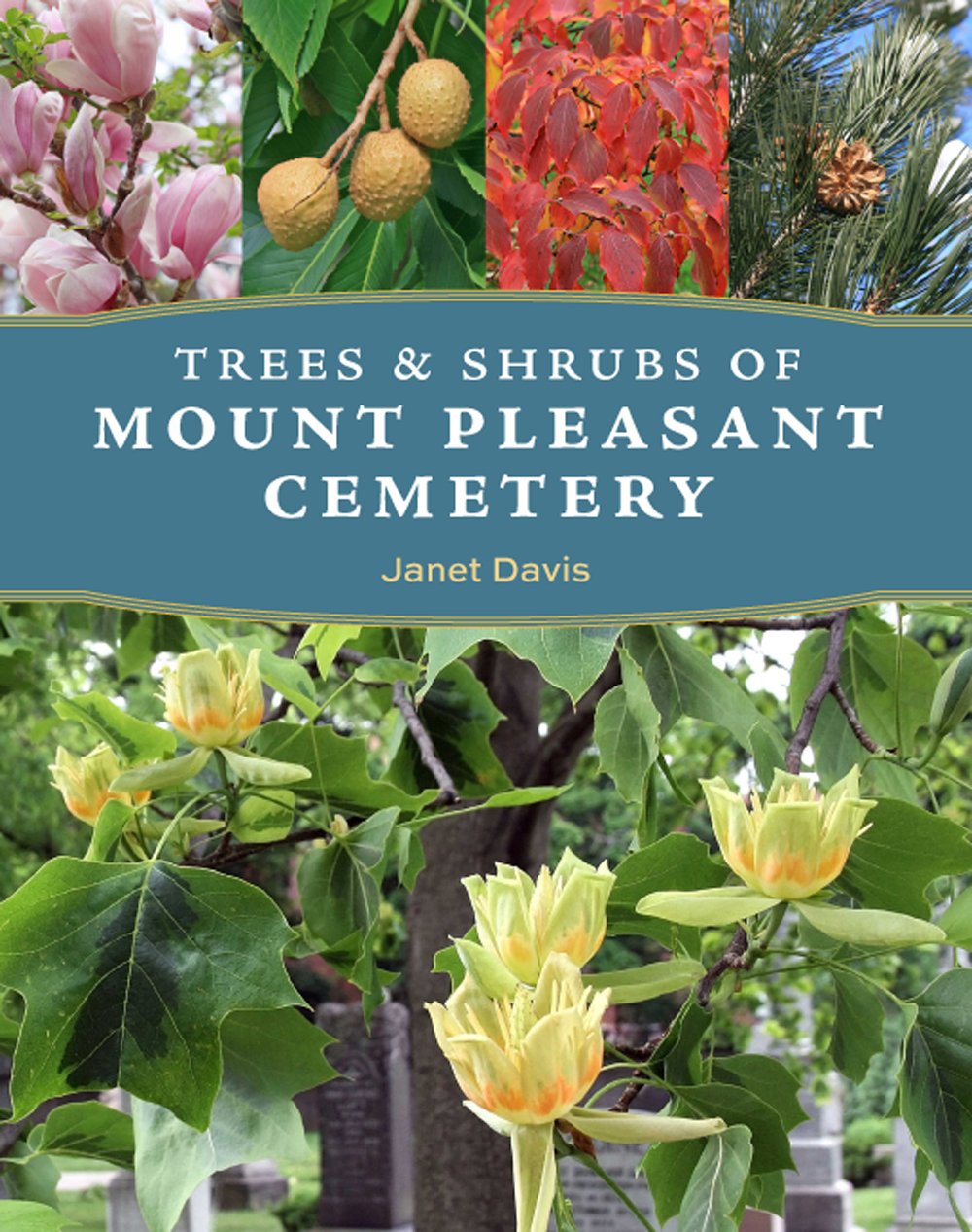
In the spring of 2026, long-time Toronto garden writer and photographer Janet Davis published her book Trees & Shrubs of Mount Pleasant Cemetery to coincide with the cemetery’s 150th anniversary and the 200th anniversary of Mount Pleasant Group, which manages Mount Pleasant in addition to nine other greater Toronto cemeteries.
Davis’s book explores the woody flora of the 205-acre cemetery in Toronto’s midtown, considered one of Canada’s largest arboretums. She describes the massive white oaks that were mature when the cemetery opened and the native shagbark hickories and black walnuts that feed the resident wildlife. Endangered rarities like American chestnut and cucumber magnolia benefit from the cemetery’s protected environment, while liquidambar and persimmon thrive among more common sugar maples, tulip trees and American beech trees. The book also looks at Asian species, like the ginkgo and katsura tree, as well as unusual shrubs, such as seven-sons flower and fringetree.
Former Landscape Ontario executive director Tony DiGiovanni said, “The book should be a textbook for anyone interested in plant identification. As a young horticulture student, I visited the cemetery often. Later on as a teacher, we brought our students. When I was with Landscape Ontario, we would host many professional meetings there. As a father and grandfather I brought my daughter and grandchildren there regularly. It is one of my favourite locations.”
Garden personality Mark Cullen has fond memories of taking his lunch to Mount Pleasant Cemetery during the 22 years he broadcast his radio garden show at CFRB nearby. He also recalls his father Len Cullen’s business partner John Weall, a professor at the University of Guelph in 1947, teaching returning war veterans the skills of landscape gardening. “He would take his students to Mount Pleasant Cemetery to study the trees, saying it was one of the best arboretums in the country, and worth the 100 km trip in from Guelph,” Cullen said.