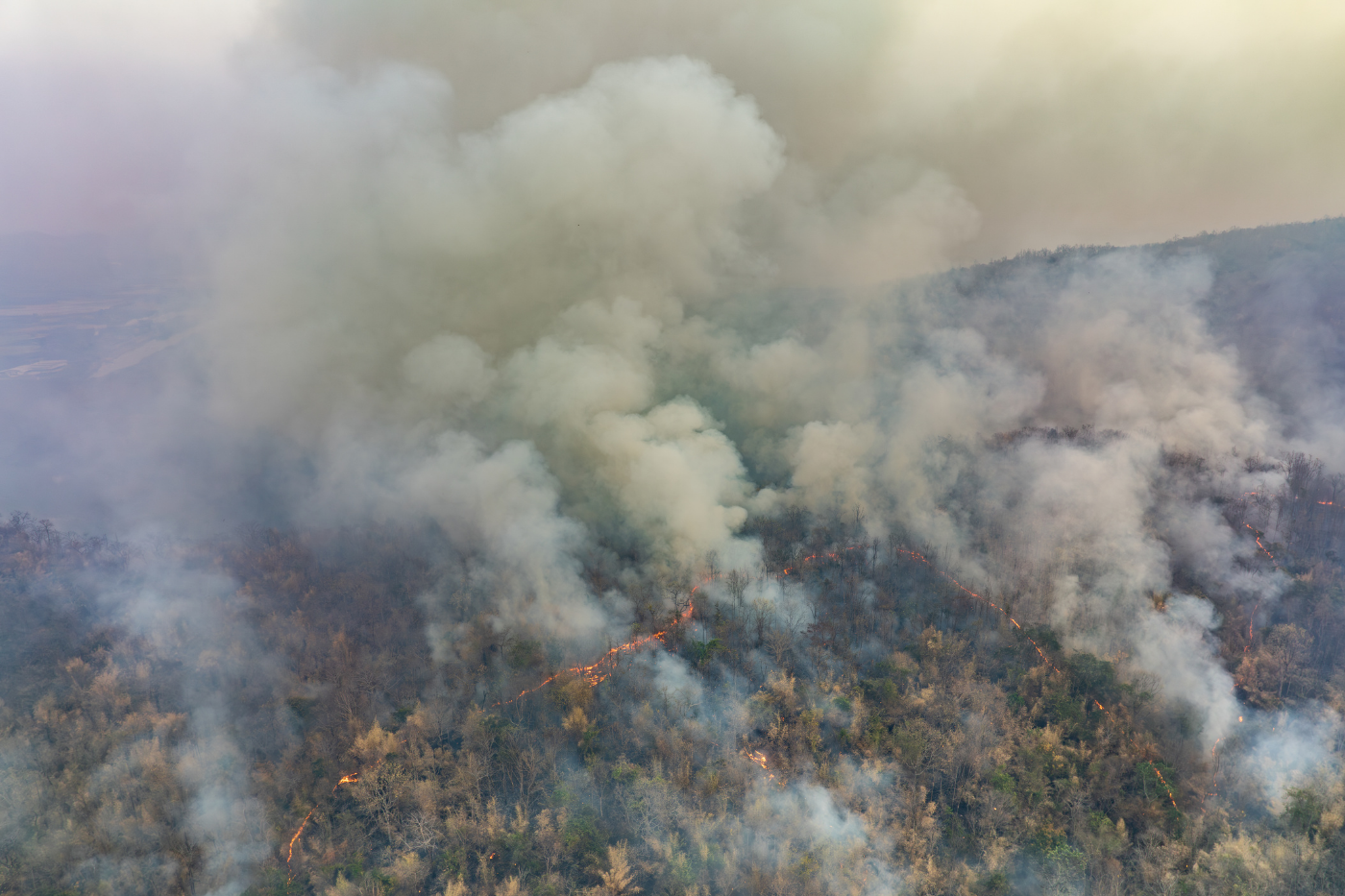
Wildfire smoke continues to blanket much of Ontario, with Air Quality Health Index (AQHI) readings reaching 10+ in many parts of the province. As poor air quality persists, Landscape Ontario encourages employers to assess conditions carefully and take practical steps to protect their crews.
Environment and Climate Change Canada continues to issue air quality warnings across much of Ontario as smoke from wildfires in northwestern Ontario affects communities across the province. While some relief may arrive in certain regions, smoke conditions could persist for several days.
Landscape Ontario has heard from many members looking for guidance on protecting crews while continuing to deliver work during this prolonged smoke event. There are practical steps employers can take to reduce health risks while making informed decisions about daily operations.
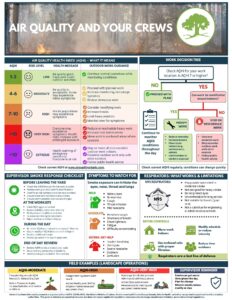
Current conditions
This guidance reflects current wildfire smoke conditions affecting Ontario. Air quality can change quickly, so employers should monitor local forecasts and AQHI readings throughout the day and adjust work plans as needed.
Key actions for employers
- Check the AQHI before crews head out and monitor conditions throughout the day.
- Reduce or reschedule strenuous outdoor work when air quality reaches high or very high AQHI levels.
- Increase rest breaks and provide access to clean-air or air-conditioned spaces where possible.
- Encourage workers to stay hydrated.
- Watch for smoke-related symptoms and respond quickly if a worker becomes unwell.
Why this matters
Wildfire smoke contains fine particles that can penetrate deep into the lungs, along with gases that can irritate the eyes, nose and throat. Environment and Climate Change Canada identifies outdoor workers as one of the groups most affected by poor air quality, along with older adults, pregnant women, infants and individuals with existing heart or lung conditions.
Physical labour increases the amount of smoke a worker breathes in, making landscape crews particularly vulnerable during prolonged smoke events.
While a single day of poor air quality may cause temporary irritation, repeated exposure over several consecutive days can increase health risks. Sustained physical exertion during smoky conditions may lead to cumulative irritation of the airways, slower recovery and increased strain on the cardiovascular system. Employers should consider these factors when planning work schedules during extended smoke events.
Check the Air Quality Health Index (AQHI)
The AQHI should be reviewed before crews begin work each day and monitored throughout the day as conditions change.
- AQHI 1–3 (Low): Normal outdoor work.
- AQHI 4–6 (Moderate): Monitor workers, particularly those who may be more vulnerable.
- AQHI 7–10 (High): Reduce or reschedule strenuous outdoor work and increase rest breaks.
- AQHI 10+ (Very High): Avoid strenuous outdoor work where possible. Consider postponing work or moving tasks indoors.
Every jobsite is different. Employers should assess conditions throughout the day and make decisions based on the nature of the work, worker health and changing air quality conditions.
Practical steps for the field
Landscape Ontario encourages employers to consider the following precautions during periods of poor air quality:
- Make N95 respirators or equivalent respiratory protection available to workers who wish to use them. Respirators help reduce exposure but are not a substitute for reducing time spent in smoky conditions and must be properly fitted.
- Increase the frequency of breaks and encourage crew members to rest in air-conditioned vehicles or enclosed spaces where available.
- Reschedule heavy physical work, such as excavation, large planting projects and hardscape installations, for when conditions improve.
- Ensure drinking water is readily available and encourage workers to stay hydrated.
- Be aware of workers who may be at greater risk because of asthma, heart disease, pregnancy or other medical conditions.
- Monitor crews for symptoms such as coughing, wheezing, chest tightness, shortness of breath, dizziness or unusual fatigue.
- Have a plan to move workers into clean air and seek medical attention if symptoms become severe or do not improve.
- Be prepared to adjust work schedules as air quality conditions change.
Employer responsibilities
Under Ontario’s Occupational Health and Safety Act, employers have a general duty to take every precaution reasonable in the circumstances to protect workers. During wildfire smoke events, this includes monitoring air quality, communicating conditions to employees and modifying work where necessary to reduce risk.
Employers with questions about their specific obligations should consult their legal or occupational health and safety advisors.
Plan ahead
Rescheduling work can be disruptive, but protecting worker health should remain the priority.
Schedule heavier work during periods when air quality is expected to improve, planning work one day at a time and communicating proactively with clients about delays caused by poor air quality.
Mental well-being
Wildfire smoke events can affect workers’ mental well-being. Regularly checking in with crews and reminding workers about available support resources can be just as important as addressing the physical impacts of smoke exposure.
Helpful resources
Air Quality Health Index (AQHI) Environment and Climate Change Canada
Current AQHI Conditions (Air Quality Ontario)
FireWork Smoke Forecast (Environment and Climate Change Canada)
Outdoor Air Quality: Safety Hazards Fact Sheet (CCOHS)
Smoke Forecast Maps (Firesmoke Canada)
Wildfire Smoke and Your Health (Health Canada)
Wildfire Smoke in Canada: Workplace Q & A (Workplace Safety & Prevention Services)
Wildfire Smoke Resources (Canadian Lung Association)