Restoring a place of peace
Toronto Chapter and Trees for Life team up to renew garden at Dorothy Ley Hospice
By Jon Durzi, LO Toronto Chapter president
with contributions from Marina Dimitriadis, executive director, Trees for Life
For many years, the garden at Dorothy Ley Hospice in south Etobicoke has been a quiet sanctuary — a place where individuals who are in care, their families and volunteers can step outside, breathe deeply and find a moment of calm. However, over time the natural wear of changing seasons and heavy use began to show. Hospice staff knew the garden still held the roots of something special, but it was clear it needed thoughtful restoration to bring it back to life.
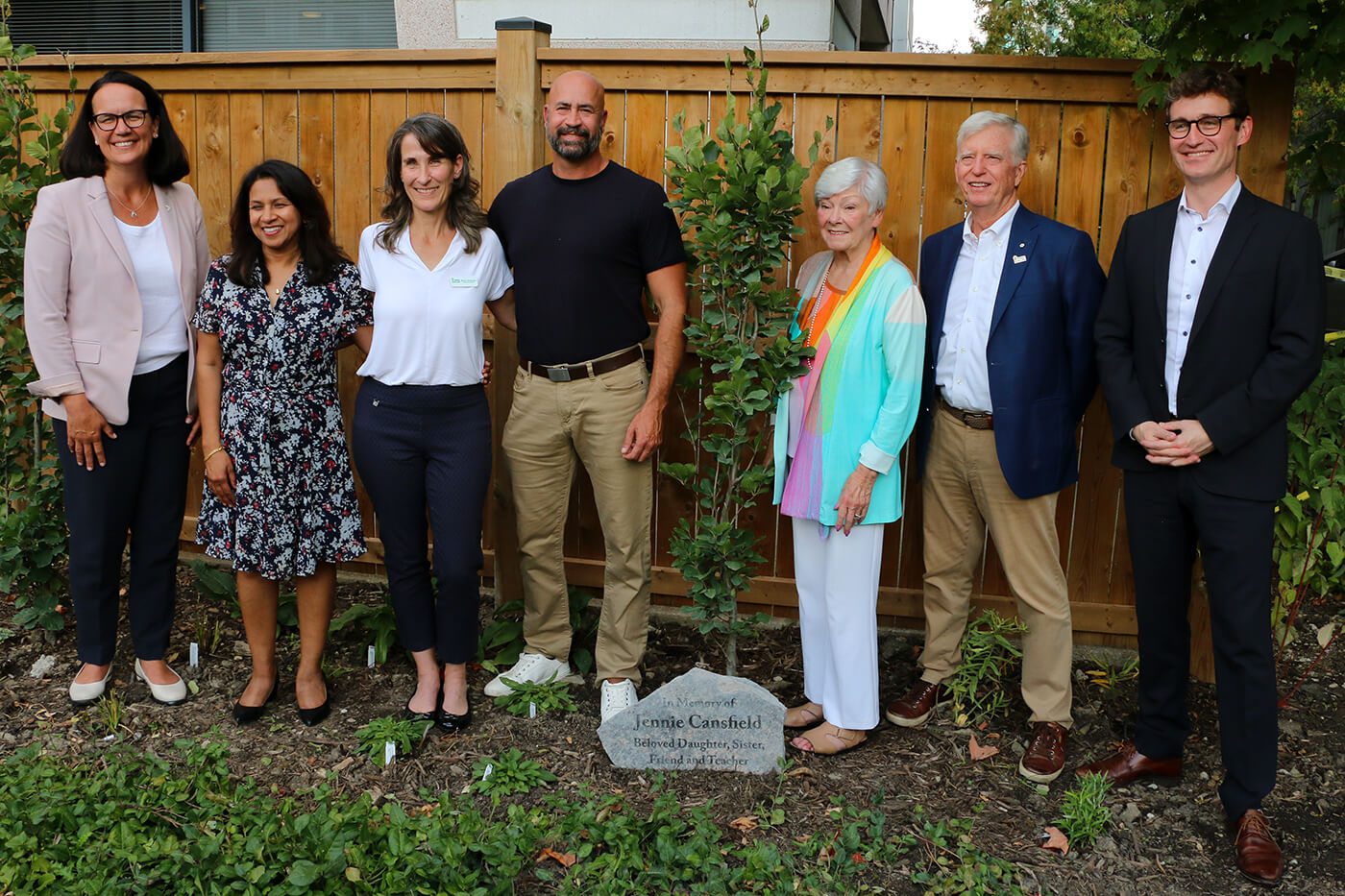
This year, a partnership between the hospice, volunteers from Landscape Ontario’s Toronto Chapter and funding from Trees for Life through the Landscape Ontario (LO) Chapter Challenge, as well as Green Cities Foundation made that restoration possible. Toronto Chapter’s generosity, not only in labour, but in expertise, design and stewardship, transformed the outdoor space into vibrant, native, pollinator-rich gardens that echo the beauty and care found inside the hospice. The Chapter offered more than landscaping; they offered time, skill and heart.
This year also marked the pilot of the Trees for Life Chapter Challenge: a $10,000 grant designed to inspire LO Chapters to create projects dedicated to heroes within their communities. Following the success of this inaugural year, the program continues in 2026 and encourages Chapters to plant a forest to carry out Trees for Life’s mission to plant trees where Canadians live, work and play.
The Dorothy Ley Hospice project began with a simple question: What should a hospice garden look like and represent in 2025 and beyond? Hospice staff, volunteers and members of LO walked the grounds to consider the role of the garden. It’s a place where families come to grieve, to remember, to sit quietly beside someone they love, and also where hospice volunteers take a quiet break among the flowers. The hospice wanted the garden to serve all those needs and also be a place that honours memory, supports healing and carries a deep respect for nature.
Toronto Chapter volunteers approached the restoration with that same spirit, supported by the Trees for Life’s Chapter Challenge grant, which inspired them to transform the existing landscape and dedicate it to heroes.
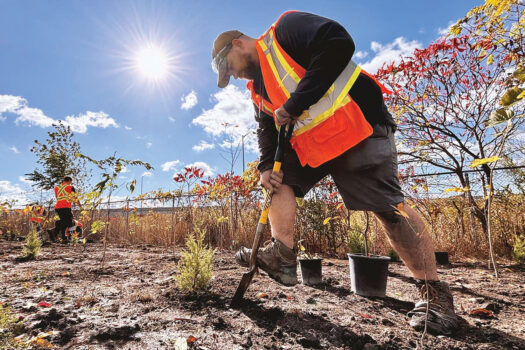
Toronto Chapter created thoughtful, ecologically grounded plans that prioritized native plants and water-wise choices, along with a palette to provide interest and nourishment for pollinators across all four seasons. The Toronto Chapter matched the grant with in-kind contributions that included coordinated plant ordering, logistics and on-site labour. This effort saved the hospice significant resources they could not have invested on their own. Members volunteered and worked tirelessly clearing out overgrowth, amending soil, shaping new beds and planting hundreds of perennials, shrubs and trees chosen specifically for long-term ecological benefit.
The garden will establish itself over the next few growing seasons, but the hospice is already seeing the results. A dedicated pollinator garden will buzz with life from early spring to late fall, native grasses will offer movement and softness and perennials will flower in summer. The design also thoughtfully considered accessibility, ensuring pathways are easy to navigate for individuals using wheelchairs, walkers or mobility aids.
The renewed garden has already become a cherished space. Loved ones sit in the shade with a cup of tea, stroll to admire the plants or simply take in a breath of nature after a difficult moment. The garden provides a gentle invitation to pause — something so needed in the emotional intensity of end-of-life journeys.
Perhaps what resonates most is how this project reflects the generosity of the wider community. LO members did not just improve the grounds, they helped the hospice honour the individuals and families who come through its doors each year. Their leadership strengthened ties across the horticultural community, enabled donations and support that the hospice could not have secured alone.
As the seasons change, the garden will evolve. What started as a restoration has become an ongoing collaboration and an investment in healing, in nature and in the power of community partnerships.
For details on how your Chapter can get involved with the $10,000 LO Chapter Challenge, contact Kate Powell, operations manager at Trees for Life, at kate@treesforlife.ca or 249-688-3421.